Sommersemester 2026, BA/MA Textil- und Material-Design Experimentelle Materialforschung , Keramikwerkstatt , Textil_Startseite
Wet Weaving - Mit Wasser Denken
Die Gegenwart ist geprägt von sich überlagernden Krisen: Klimawandel, wachsende Ungleichheit und die Zentralisierung von Wissen und Produktion. Diese Entwicklungen wurzeln in einem Weltbild, das Mensch und Natur, Entwurf und Ausführung strikt voneinander trennt. Wet Weaving ist eine Antwort: eine experimentelle Materialmethodik, die technische Innovation mit einer anderen gestalterischen Haltung verbindet.
Wet Weaving gründet auf drei Designprinzipien. Design Global, Manufacture Local versteht Wissen als Gemeingut, das lokal in Produktion überführt wird. Commons-Based Peer Production beschreibt die kollektive Erzeugung von Wissen und Gemeingütern jenseits des Markts. More-Than-Human Design erweitert den Entwurfsprozess um nichtmenschliche Akteure, Materialien und Umwelt als aktive Mitgestaltende.
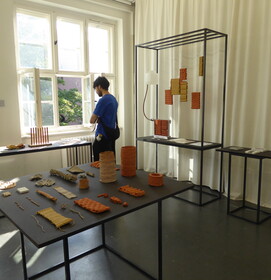
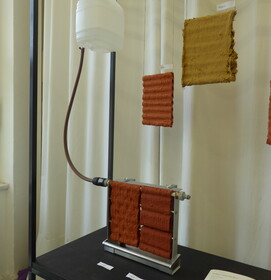
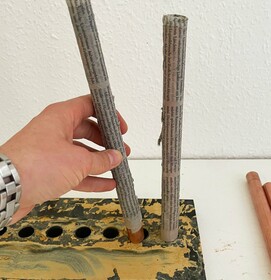
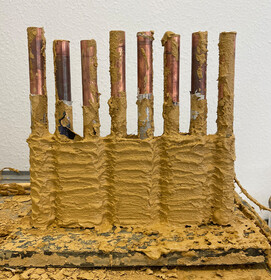
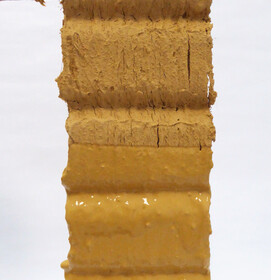
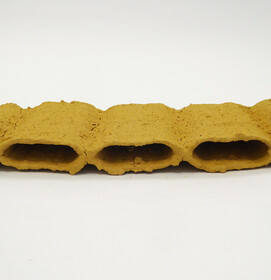
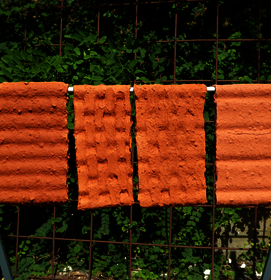
Garn wird in flüssigen Ton getaucht, auf einem Rahmen verwoben, getrocknet, erneut getaucht und bei 900°C gebrannt. Das Garn verbrennt vollständig – zurück bleibt eine Keramikstruktur, deren Porosität dem textilen Gewebe entspricht. Der Ton ist zirkulär: Ausschuss wird zu Schamotte – Rohstoff für neue keramische Massen. Risse, die im Prozess entstehen, sind keine Fehler, sondern funktionale Eigenschaften – sie vergrößern die Verdunstungsoberfläche und ermöglichen passive Kühlung und Zwischenspeicherung.
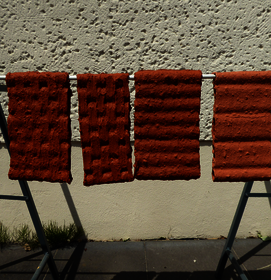
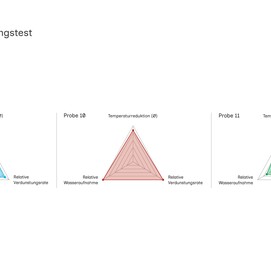
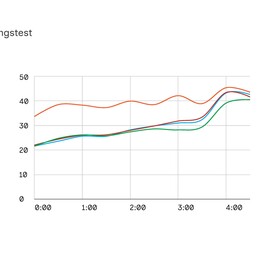
Über 14 Probenreihen wurden Garntyp, Webmuster, Ton-Konsistenz und Trocknungsprozesse iterativ erprobt. Probe 9 erzielte bis zu 15°C Temperaturreduktion – und bewies Rissbildung als Qualität, nicht als Fehler.
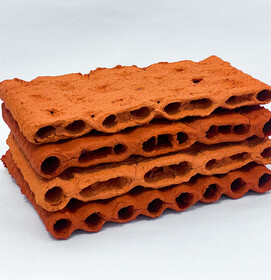
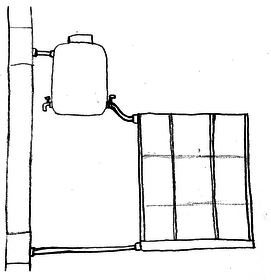
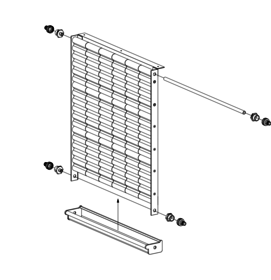
Im Wechselspiel aus Experimentation und Entwurf entwickelte sich das Porous Panel System – eine Übertragung in architektonischen Maßstab. Es leistet einen Beitrag zur Schwammstadt: Starkregen aufnehmend, Wasser zwischenspeichernd, urbaner Überhitzung entgegenwirkend. Das System ist offen dokumentiert und mit einfachen Mitteln reproduzierbar – kein singuläres Produkt, sondern Teil eines lebendigen Geflechts aus Menschen, Materialien und Ökosystemen.
Wet Weaving – Thinking with water
The present is shaped by overlapping crises: climate change, growing inequality, and the centralization of knowledge and production. These developments are rooted in a worldview that strictly separates humans from nature, design from fabrication. Wet Weaving is a response: an experimental material methodology that combines technical innovation with a different design sensibility.
Wet Weaving draws on three design principles. Design Global, Manufacture Local understands knowledge as a commons, translated into production locally. Commons-Based Peer Production describes the collaborative creation of knowledge and physical commons beyond market logic. More-Than-Human Design expands the design process to include non-human beings, materials and environment as active co-creators.
Yarn is dipped in liquid clay, woven onto a frame, dried, dipped again, and fired at 900°C. The yarn burns away completely – what remains is a ceramic structure whose porosity corresponds to the textile weave. The clay is fully circular: rejects become grog – raw material for new ceramic bodies. Cracks that form during the process are not defects but functional properties – they increase the evaporation surface and enable passive cooling and temporary water storage.
Across a series of 14 samples, variables such as yarn type, weave pattern, clay consistency, and drying processes were iteratively tested. Sample 9 achieved up to 15°C of temperature reduction – demonstrating controlled crack formation as quality, not flaw.
Through the interplay of experimentation and design, the Porous Panel System emerged – a translation of the material principle into architectural scale. It contributes to the Sponge City: absorbing rainfall, storing water, and counteracting urban overheating. The system is openly documented and reproducible with simple means – not a singular product, but a link in a living network.
Kontakt: ben.wesch@alice.de
Social: @benw_id